Application of Electrode Paste (Self-baking Electrodes) in Carbidizing Furnaces
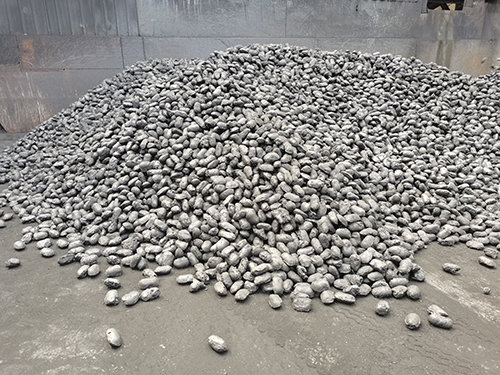
Continuous self-baking electrodes, commonly known as self-baking electrodes, are composed of electrode paste and an iron shell. During operation in a carbidizing furnace, the electrode continuously wears down and must be replenished by lowering it gradually. When the electrode is lowered below the conductive jaw plate, it undergoes high-temperature baking at approximately 1000°C, carbonizing the electrode paste into solid electrode material. Since the iron shell can be welded continuously without interrupting power supply to the furnace, and since electrode paste is continuously fed into the shell while being sintered inside the furnace, this type of electrode is referred to as a continuous self-baking electrode.
Self-baking electrodes are widely used in carbidizing furnaces and ferroalloy furnaces. Their key advantages include large diameters up to 2 meters, elimination of threaded joints, convenient installation on carbidizing furnaces, and low cost—factors that greatly facilitate the development of larger-capacity furnaces.
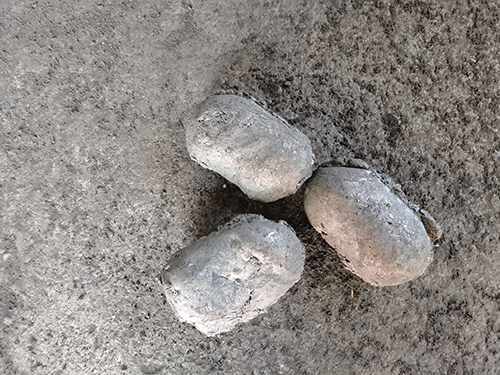
In the entire carbidizing furnace system, the electrode functions as the heart. In carbide production, electric current passes through the electrode into the furnace to generate arcs for smelting. Thus, the electrode holds an extremely important position within the furnace.
During furnace design, many parameters are determined based on electrode diameter. The allowable current density across the cross-sectional area of the electrode determines its size: smaller diameters permit higher current densities, while larger diameters allow lower current densities. Proper selection of current density relative to electrode diameter is crucial for overall furnace performance.
Electrode diameter significantly influences design considerations such as concentric circle diameter, electrode spacing, furnace inner diameter, furnace depth, outer diameter, and bottom thickness. These dimensions are typically derived from empirical data proportional to the electrode diameter.
In three-phase furnaces, electrodes are generally arranged in a triangular configuration. Design must ensure sufficient and uniform temperature distribution among electrodes, enabling interconnected high-temperature zones, while also maintaining adequate distance between electrodes and furnace walls to ensure even radiant heat distribution and prevent premature wall damage. The ratio of the electrode concentric circle diameter to the furnace inner diameter is typically 0.44; thus, the furnace inner diameter should be 2.25 times the electrode concentric circle diameter.
Regarding the ratio between the electrode concentric circle diameter and the electrode diameter, current practice generally favors a multiplier of 2.7. The furnace depth is usually 2.3 times the electrode diameter. Additionally, calculations involving furnace diameter, electrode insertion depth into charge, furnace bottom thickness, bottom area, and furnace capacity all depend on electrode specifications, which will not be detailed here.
Clearly, the electrode plays a vital role in the overall design of the furnace. Currently, most domestic electric furnaces use self-baking electrodes, and electrode-related incidents are the most common accidents encountered in furnace operations. Such failures include soft or hard breaks, shell cracking, paste leakage, "sparking" (electrode tip ignition), and inability to lower the electrode. Any electrode failure disrupts normal production, sometimes causing shutdowns lasting dozens of hours or even several days, resulting in significant labor and material waste, and occasionally leading to serious personal injuries.
In summary, electrodes occupy a critical position in carbidizing furnaces. Without them, the furnace cannot function properly; if they fail, production may cease entirely or become paralyzed. Therefore, carbidizing plant operators must thoroughly understand the composition, properties, manufacturing methods, functions, and impact of electrode paste on furnace operation.


 Phone:+86 19937179450
 Whatsapp:+86 19937179450
 Email:
 Add:Zhengdong New District,Zhengzhou City,China.