What is the binder used in electrode paste?
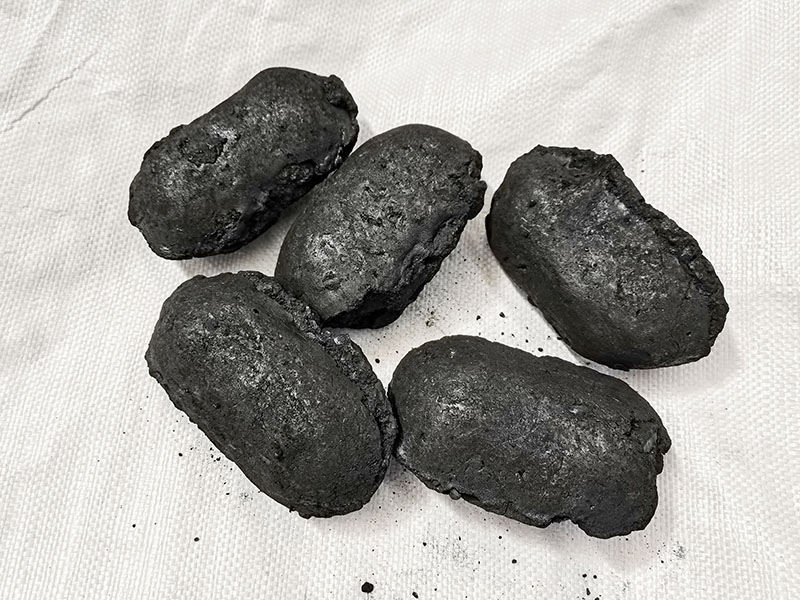
During the self-baking process of electrode paste, the carbonized residue left behind by the binder enhances the electrode's strength and ensures a uniform texture. Coal tar pitch and coal tar are the most suitable binders.
Coal tar consists of a group of fractions with lower distillation temperatures than coal tar pitch. It is a viscous liquid, ranging in color from dark brown to black, with a relative density of 1.05–1.25. The quality of coal tar primarily depends on the carbonization temperature and the design of the furnace. When carbonizing a specific coal blend in a furnace of a given design—under consistent temperature conditions—the resulting coal tar will exhibit uniform composition and physical properties. The coal tar discussed here is heat-treated and used to adjust the softening point of electrode paste intended for closed-type furnaces.
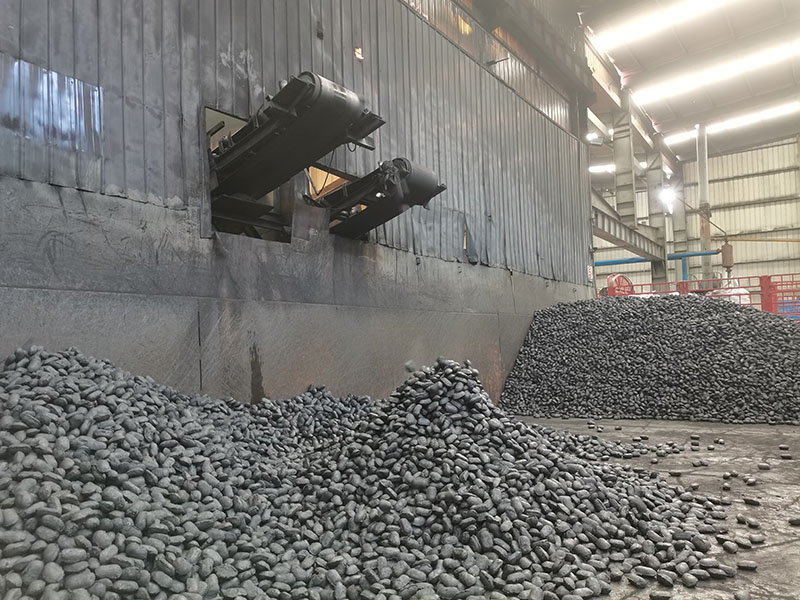
Coal tar pitch is a black, glossy solid with a relative density of 1.245–1.299. It is the residue that remains after other fractions have been distilled off from coal tar at temperatures above 360°C.
Based on its softening point, pitch is categorized into various types: soft pitch; medium-soft pitch (oily, 40–50°C); medium pitch (65–75°C); and hard pitch (above 80°C). Rongxing Electrode Paste utilizes medium-temperature pitch. The incoming quality standards for medium-temperature pitch are as follows:
Softening point (mercury method): 65–75°C
Free carbon (C): 18–25%
Moisture content (W): ≤ 5%
Ash content: ≤ 0.5%
Volatile matter: 55–70%
The moisture in pitch consists of both mechanically suspended water and absorbed water. Before it can be used in production, the pitch must undergo heat treatment at temperatures above 130°C for several days to remove this moisture and prevent expansion.
The composition of pitch includes free carbon, which is either carried over from the tar or formed through the decomposition of high-molecular-weight compounds during the tar distillation process.
The most valuable component of pitch and tar is the coking fraction—specifically, the "binding coke." This binding coke can be obtained by removing the free carbon from the coking residue.
PREVIOUS:Discussion on the Mechanical Strength of Electrode Paste for Submerged Arc Furnaces
NEXT:There is no more content!


 Phone:+86 19937179450
 Whatsapp:+86 19937179450
 Email:
 Add:Zhengdong New District,Zhengzhou City,China.